About
The business in short: the Glendale properties we work on, how a job gets scoped and priced in writing, and the kinds of work we say no to.
Locating leaks, and only that
Rillstone finds water leaks in houses and small buildings. We do not sell repairs alongside the search: once the spot is marked, the repair is quoted separately, and the finding can go to any licensed plumber.
Most of the skill is in choosing the instrument. A ground microphone, a thermal camera, tracer gas and a pressure gauge each suit a different pipe and a different leak, and we decide which before we arrive by asking about the house and walking you through the valves.
Every figure printed here is an estimated range built from published trade numbers; none of them is a Glendale average. A number for your own house starts as a free quote by phone and becomes a written quote before work begins.
- Locating only; repairs quoted separately
- No price before the build year and the valve results
- No floor or yard opened to search for a leak
- Told plainly when the meter shows nothing to find
How it runs
Four steps, no surprises
Pipe material and hot or cold side settled first, then the spot is marked and written up.
Tell us the year and the symptom
When the house was built, what made you call, and how the meter behaves once every fixture is off. The year is the best early clue to what the pipe is, and the pipe decides the instrument.
Close three valves with us on the phone
The house shutoff, the irrigation shutoff and the cold inlet on the water heater. Each one halves the search and costs nothing, and between them they usually say whether the leak is outside, in the yard, or on the hot or cold side indoors.
We bring the instrument that suits the pipe
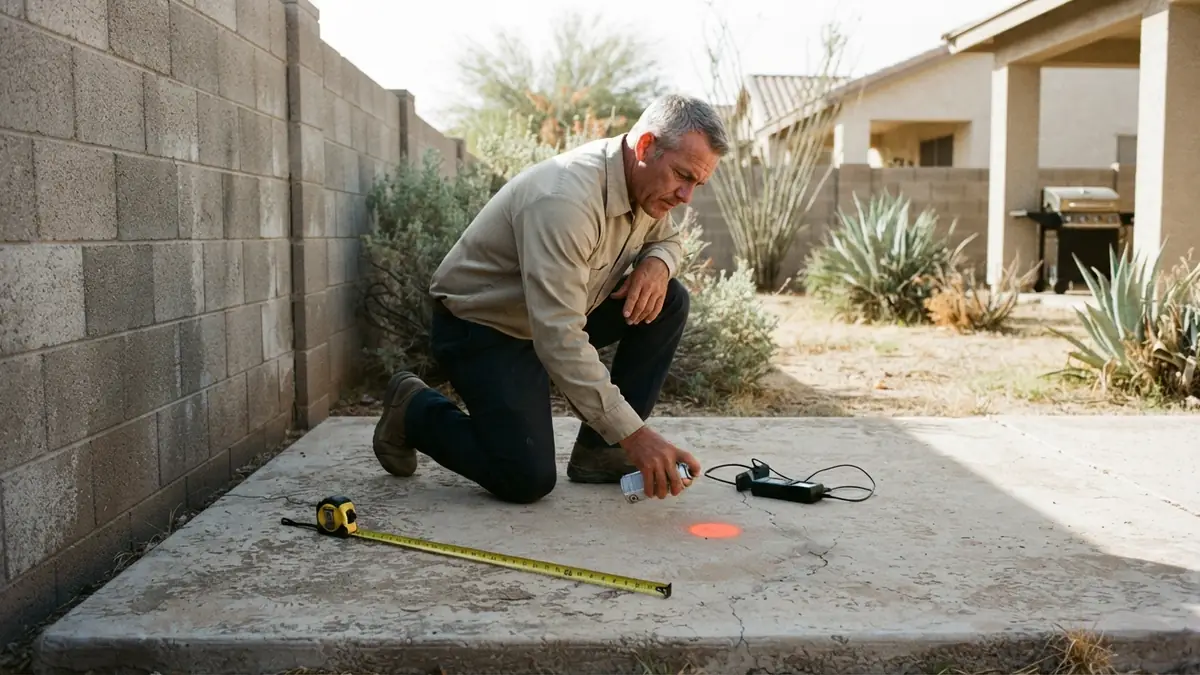
A ground microphone for copper, tracer gas for plastic or a very quiet leak, a thermal camera for a hot line, a pressure gauge to test one section against another. The route of the pipe is traced first, so we listen where it actually runs.
The spot marked, the method written down
The leak's position is marked where you can see it, with a short note of the instrument that found it and what fixing it will probably take. The repair is quoted separately, and any permit it needs comes from the City of Glendale.
Before you choose
Five questions worth asking any leak detector, us included
Each is about how the leak will be found, which is easier to check than a promise that it will be.
Will you ask what the pipe is made of?
Copper, polybutylene, PEX and CPVC are found in different ways. A visit planned without that question can bring the wrong instrument for the house.
Which side has been ruled out, and how?
House or yard, hot or cold, supply or irrigation. Each answer should come from a valve and a meter reading you could repeat yourself.
Is the search priced apart from the repair?
It should be. Finding the leak is diagnosis and fixing it is plumbing, and a bill that keeps them apart is one you can compare.
What will I have in writing?
A mark on the floor or ground, the instrument that confirmed it, and a line on what the fix probably involves. Any plumber can work from that note, and it travels well to a second opinion.
Can I check your license?
The Arizona Registrar of Contractors licenses plumbing contractors, and its online search confirms in moments whether a given license is active.
Want a number on it?
Call (623) 777-8670, say what you are seeing, and leave the call with a written quote and a time for Glendale.
Talk to us
Talk to us about leak detection in Glendale
Call now
(623) 777-8670Pipe material and hot or cold side settled first, then the spot is marked and written up.
Before you call
- Build year asked before anything else
- Hot or cold side settled at the heater
Where we work
Every area we cover